


INORI is a premium makhana supplier from Bihar, specializing in high-quality fox nuts for snack brands, distributors, and bulk buyers. With direct farmer sourcing, strict Sutta-based grading, and a focus on consistency, we deliver reliable, export-re...
- (+91) 8641088078
- contact@inori.co.in
- Bastaul, Pranpur, , Katihar, Bihar, India. 854116
© 2020 INORI. All Rights Reserved
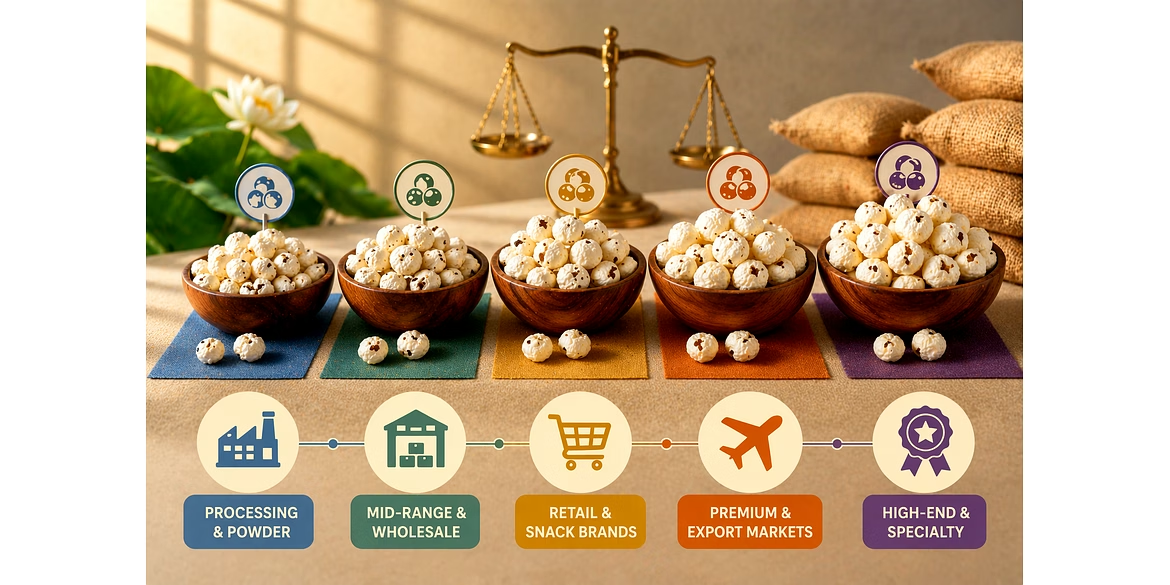

Choosing the right makhana grade is one of the most important decisions for importers, distributors, wholesalers, exporters, and snack brands. The grade you select affects product quality, pricing, consistency, customer satisfaction, and overall brand positioning. A clear understanding of the makhana Sutta grading system helps businesses align raw material quality with product goals, market expectations, and long-term profitability.
Why Choosing the Right Makhana Grade Matters
Selecting the right makhana grade is a strategic business decision, not just a sourcing choice. The grade of makhana you buy directly influences final product quality, visual appeal, customer experience, and the type of market your business can target. For snack brands and bulk buyers, the wrong grade can create a mismatch between product promise and actual consumer expectations.
Understanding the makhana grading system allows businesses to make informed purchasing decisions and reduce the risk of buying material that is either below or above the needed quality level. This helps maintain a better balance between cost and value while supporting stronger margins and product consistency.
The right grade improves product performance, supports stronger brand positioning, and helps ensure better customer satisfaction across different sales channels. Businesses comparing procurement strategies may also find it useful to explore bulk makhana sourcing and premium snack ingredient selection.
Makhana is commonly graded using the Sutta system, which classifies fox nuts based on size, appearance, and overall quality. Each grade serves a different business purpose, which is why understanding the grading system is essential before placing a bulk order. The right choice depends on whether the buyer is using makhana for processing, retail packaging, export, or premium snack production.
In general, 3–4 Sutta makhana consists of smaller-sized kernels that are more suitable for processing applications. 4+ Sutta offers improved consistency and works well for buyers seeking a practical balance between price and quality. 5 Sutta is widely considered a premium grade for retail products because it offers better appearance and pack presentation. Higher grades such as 5+ and 6+ are commonly used for export, premium retail, and high-end packaged snack lines.
Understanding these differences helps businesses choose a grade that matches both the intended product use and the expectations of their target market.
Identify Your Business Type and Requirements
The best makhana grade for your business depends on your business model and the way you plan to use the product. Different buyers have different commercial needs, and selecting the wrong grade can lead to unnecessary cost or quality problems. A processing business may not need the same grade as a premium retail snack brand, and an exporter may require more consistency than a local wholesaler.
Processing units often prefer cost-effective lower grades because appearance is less important when makhana is used for powder, blends, or ingredient-based applications. Wholesalers may require a balanced combination of quality and pricing so they can serve a broader range of buyers. Retail brands usually prefer premium grades because presentation and consistency matter more for packaged products. Exporters and global snack brands often focus on higher, more uniform grades that meet premium and international expectations.
Matching the grade to your business model helps you control costs while maintaining the right commercial fit for your product line.
Different markets expect different levels of quality, so makhana grade selection should always be aligned with the customer segment you want to serve. Choosing the right grade helps ensure that your product matches market expectations in terms of size, appearance, value perception, and retail performance.
Budget-focused markets are generally more suitable for 3–4 Sutta grades, where cost sensitivity is a stronger driver than premium appearance. Mid-range markets usually respond well to 4+ to 5 Sutta grades because they provide a more balanced mix of affordability and acceptable visual quality. Premium markets often require 5+ and 6+ grades to support better shelf appeal and stronger brand positioning. For international and export-focused markets, buyers often look for 5+ and above to meet higher expectations around consistency and presentation.
When businesses align makhana grade with target market demand, they improve customer satisfaction and reduce the chance of product mismatch after launch.
Consider Pricing vs Quality Balance
Balancing pricing and quality is essential when selecting the right makhana grade. Lower grades may offer cost advantages, but they may not support the visual quality or consistency needed for premium retail markets. Higher grades are more expensive, but they usually provide better size, appearance, and stronger commercial value in premium segments.
The ideal choice depends on your margin goals, product positioning, and customer expectations. Businesses targeting budget-conscious buyers may benefit from more economical grades, while brands selling premium snack products often need higher grades that justify stronger pricing. In many cases, the lowest-cost option is not the most profitable if it creates quality complaints or weak shelf performance.
A well-planned makhana buying strategy should always evaluate price in relation to brand value, not in isolation.
The intended application of makhana has a direct impact on the grade your business should choose. Product use determines how much importance should be given to appearance, size, texture, and consistency. A grade that works well for one application may not be appropriate for another.
For powder and ingredient-based processing, 3 Sutta or similar lower grades are often sufficient because the whole-kernel appearance is less important. For bulk packaging and more general wholesale use, 4 Sutta or 4+ grades may provide a suitable balance. Retail snack products usually perform better with 5 Sutta because of the stronger visual presentation. Premium snacks and export-oriented products typically require 5+ and 6+ grades to support better pack appearance, consumer perception, and premium pricing.
Businesses that clearly define how makhana will be used can make more efficient sourcing decisions and reduce quality mismatch across product lines.
Focus on Consistency and Supplier Reliability
Choosing the right makhana grade is only part of the decision. Long-term success also depends on supplier reliability and batch consistency. A good supplier should follow standardized grading methods, maintain dependable bulk availability, and provide uniform size and texture across orders.
Consistency matters because even a well-chosen grade loses value if product quality changes from batch to batch. Reliable supply chain support helps businesses maintain stable product performance, stronger customer trust, and smoother production planning. This is especially important for snack brands, exporters, and private label buyers that rely on repeat quality for brand reputation.
Working with a dependable supplier helps businesses turn the right grade choice into a long-term sourcing advantage.
Many businesses make avoidable sourcing mistakes because they focus too heavily on price or do not fully understand the grading system. One common mistake is choosing a makhana grade based only on short-term cost savings without considering the expectations of the target market. Another is ignoring the difference between grades and assuming all makhana performs the same in retail or export settings.
Businesses can also run into problems by overestimating their quality needs and paying too much for a grade that is unnecessary for the product application. On the other hand, underestimating quality requirements can lead to weak shelf appeal, complaints, and disappointing product performance. Understanding the grading structure and aligning it with business strategy helps avoid both of these costly mistakes.
A practical, market-based approach to grade selection leads to stronger purchasing decisions and better long-term outcomes.
Conclusion: Making the Right Choice for Your Business
Choosing the right makhana grade requires a clear understanding of your business goals, target market, product format, and pricing strategy. By matching the appropriate grade with your intended application and customer expectations, you can improve product performance, strengthen customer satisfaction, and support better commercial results.
Whether your business focuses on processing, wholesale, retail, or export, the right makhana grade can help you create a stronger and more sustainable sourcing strategy. Businesses looking to refine purchasing decisions may also explore makhana supplier evaluation and export-quality makhana standards for broader guidance.
Q1. How do I choose the right makhana grade?
Choose the grade based on your business type, target market, product usage, and the level of quality your customers expect.
Q2. Which grade is best for snack brands?
For most retail snack brands, 5 Sutta and above is ideal because it offers better size, consistency, and shelf appeal.
Q3. What grade is suitable for export markets?
Premium grades such as 5+ and 6+ are generally preferred for export markets due to their stronger uniformity and premium appearance.
Q4. Is lower grade makhana bad quality?
No, lower grade makhana is not bad quality. It is simply more suitable for processing, powder, or cost-sensitive commercial applications.
Q5. How does grade affect pricing?
Higher grades are generally more expensive because they offer better kernel size, visual appearance, and more consistent premium quality.
Q6. Can one business use multiple grades?
Yes, many businesses use multiple grades for different product lines, price segments, or processing needs.
Q7. Why is consistency important in makhana supply?
Consistency ensures uniform product quality, better production performance, and higher customer satisfaction across repeat orders.